Specialist FES cycling, since 2003
FES Cycling
and much more.
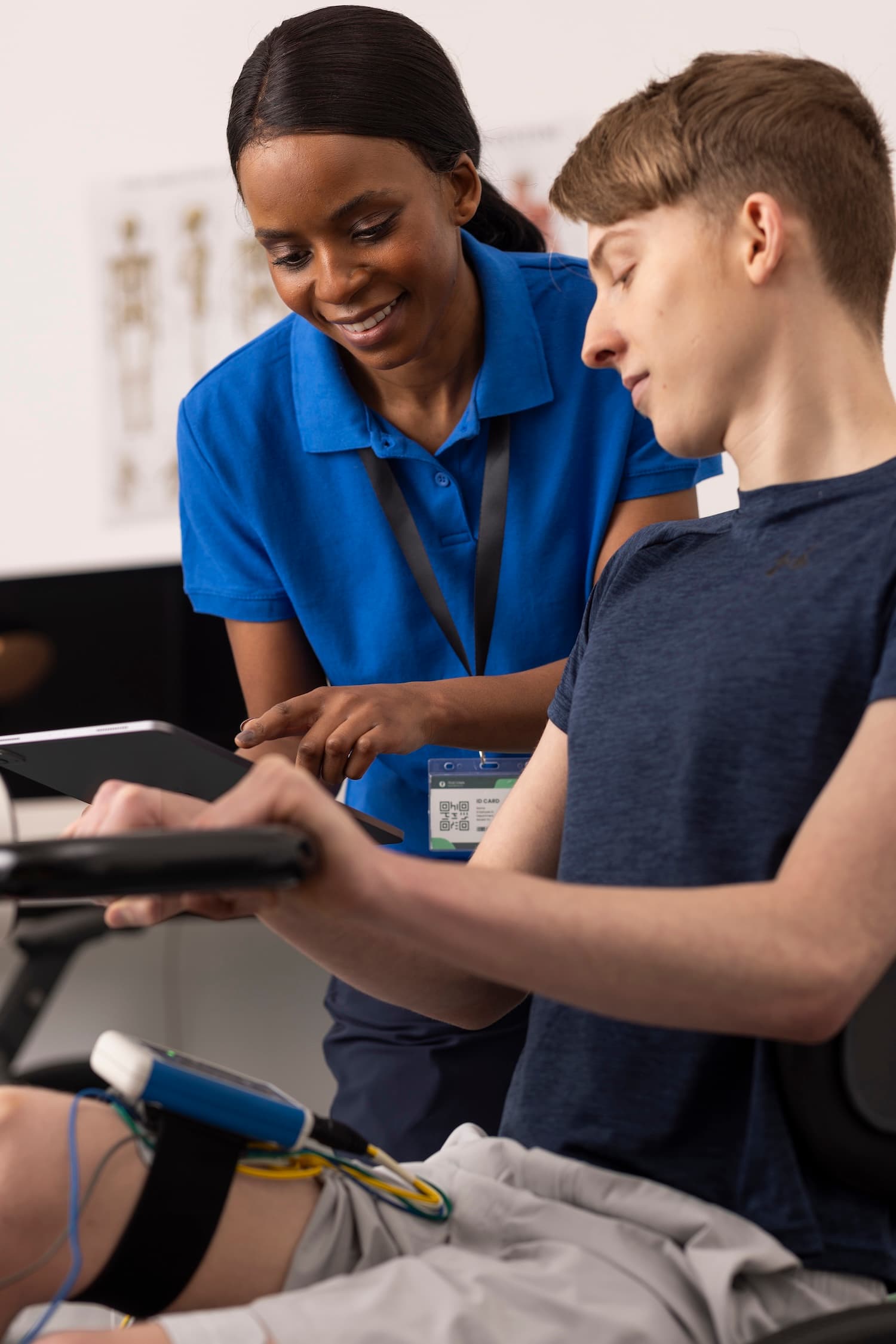
Functional Electrical Stimulation cycling uses small electrical impulses to activate paralysed or weakened leg muscles, so you can pedal a stationary bike and get active exercise. Until now, this meant buying a complete system built for that one purpose. PAJUNK® Stim2Go changes that. It pairs with almost any cycle ergometer, works standalone for functional training, and supports tSCS protocols. All controlled through an app that keeps the device up to date as the evidence evolves.
- NHS Supplier
- ISO 13485 Certified
- 20+ Years in FES Cycling
- UK-Wide Consultative Service
The technology, briefly
What FES cycling actually does.
Paralysis or weakness due to a neurological condition limits the active exercise we can participate in. FES uses small, programmed electrical impulses to activate paralysed or weakened muscles, producing co-ordinated movement on a stationary bike. Regular FES cycling has been demonstrated by extensive research to support cardiovascular health, muscle mass, bone density, and circulation.
The evidence is strongest for people who maintain a consistent programme over months and years. The honest summary: outcomes vary between individuals, but the trajectory for those who stay with it is positive.
Who we work with
Conditions we support.
FES cycling can support people across a range of neurological conditions. Every situation is different. We help you understand what is realistic for you.
- Read more →
Spinal cord injury
Active leg exercise after complete or incomplete SCI. Supports muscle mass, circulation, and long-term health.
- Read more →
Stroke
Repetitive, assisted cycling that helps rebuild strength and coordination in affected limbs.
- Read more →
Multiple sclerosis
Low-impact exercise that adapts to varying energy levels and changing abilities over time.
- Read more →
Parkinson's disease
Forced exercise that may help with motor symptoms alongside general cardiovascular fitness.
- Read more →
Other conditions
Cerebral palsy, traumatic brain injury, or other causes of leg weakness or paralysis. If your condition is not listed, talk to us.
The system
One stimulator. Many uses.
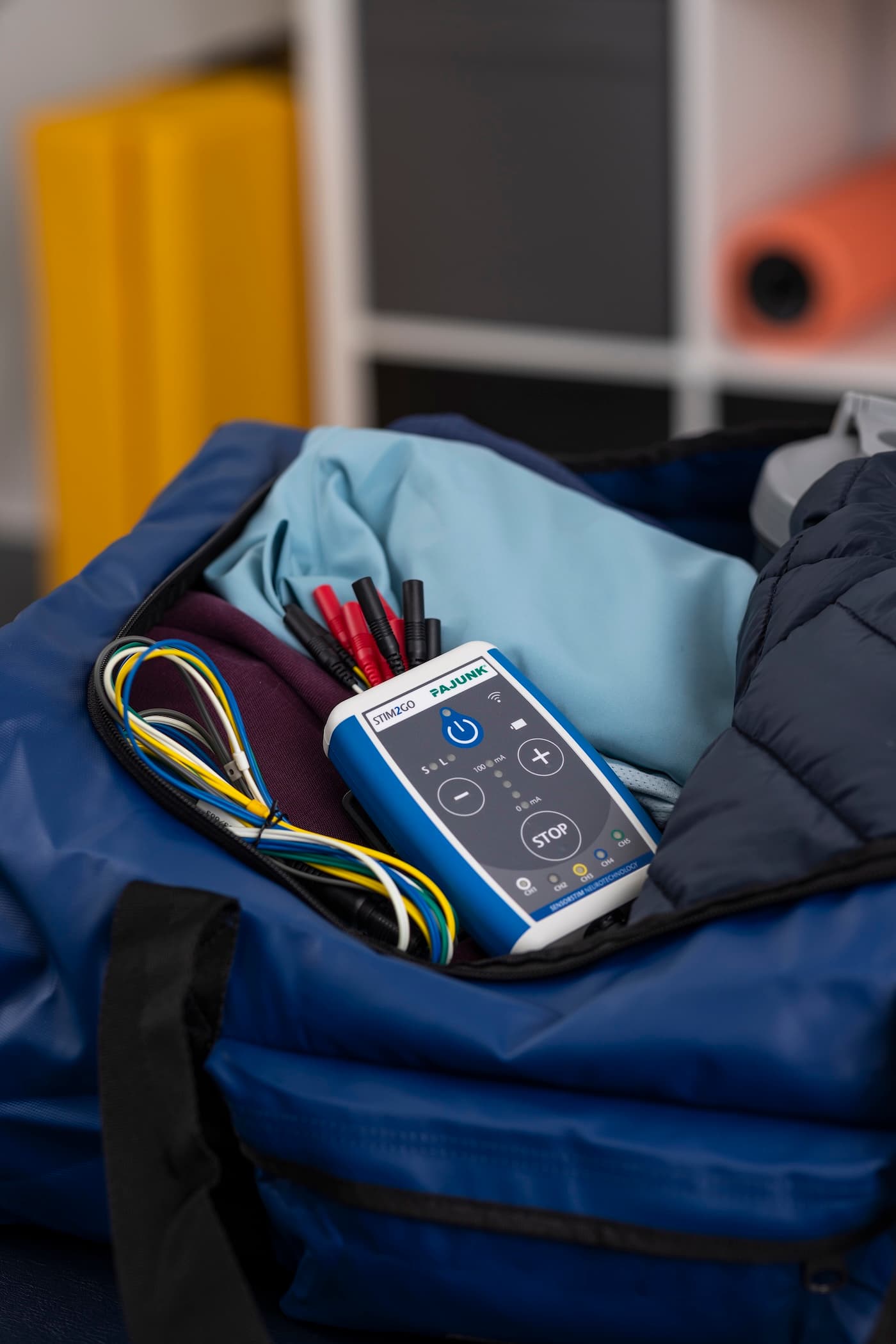
PAJUNK® Stim2Go
Stim2Go Solo.
The wearable, programmable stimulator at the centre of every configuration we supply. Use it standalone for functional training. Pair it with the cycle ergometer that fits your home and your goals.
- Wearable, app-controlled, five-channel stimulator
- Standalone use or paired with most cycle ergometers
- Supports FES cycling, functional training, and tSCS protocols
From £7,484
The people behind it
It is not just the device.
It is who sets it up.
When you invest in a medical device, what often matters most is what happens after the purchase. Who assesses your situation. Who sets it up in your home. Who picks up the phone when something is not right. For FES cycling in the UK, that is us. We have been doing this work for over twenty years, and we still answer the phone ourselves.
Whatever your condition and wherever you are in your journey, there is always reason to pursue better health. The right knowledge, the right technology, and the right support can make a meaningful difference.

Derek Jones
Founder, Anatomical Concepts (UK) · More about Derek
From the practice
Written from work, not from marketing.
- 20 min read
The New Cochrane Review on Fitness After Spinal Cord Injury: Where FES Cycling Fits
The first Cochrane review of exercise for fitness after spinal cord injury found that exercise may improve fitness, with low certainty. It says almost nothing about FES cycling, and the reason is the question it asked. Here is where FES earns its place, and where arm exercise does the job as well for less.
- 14 min read
Electrical Stimulation for Spasticity: An Evidence Audit for Clinicians
What should we actually tell patients about electrical stimulation and spasticity? A modality-by-modality audit of the current evidence: the effect sizes, the dose thresholds, the negative trials, and the true state of tSCS.
- 14 min read
Does FES Cycling Build Muscle or Just Stop the Wasting? What the Research Measures
Will an FES bike actually increase your leg muscle, or just slow the wasting? The research gives clearer numbers than the internet does: reliable gains in muscle size, partial gains in tissue quality, and both depend on continuing to train.
- 11 min read
The Test That Tells You Whether FES Cycling Can Work for You
Before you invest in FES cycling, one question decides whether it can work at all: is the nerve between your spinal cord and your muscles still intact? A nerve conduction study answers it. Here is how to read one, in plain English.
- 6 min read
One Stimulator Across the Caseload: The Case for Consolidating Modalities
Most clinics accumulate single-purpose stimulators over time, one per modality. A device that consolidates FES, NMES, TENS and tSCS into one body-worn unit changes the equipment conversation from replacing capacity to broadening it. Here is the practical case, and its limits.
Questions are welcome.
Whether you are exploring options for yourself, a family member, or a client, we are happy to talk. No pressure. Just honest, practical advice based on your individual situation. Tell us a little about where you are; we will send a considered reply within a working day.